
Find a limb lengthening surgeon. 44 clinics. 19 countries. All verified.
We check every clinic before we list it. We publish complication rates. If a clinic hides its data, we list that fact too. 44 clinics. 19 countries. Every surgeon named.
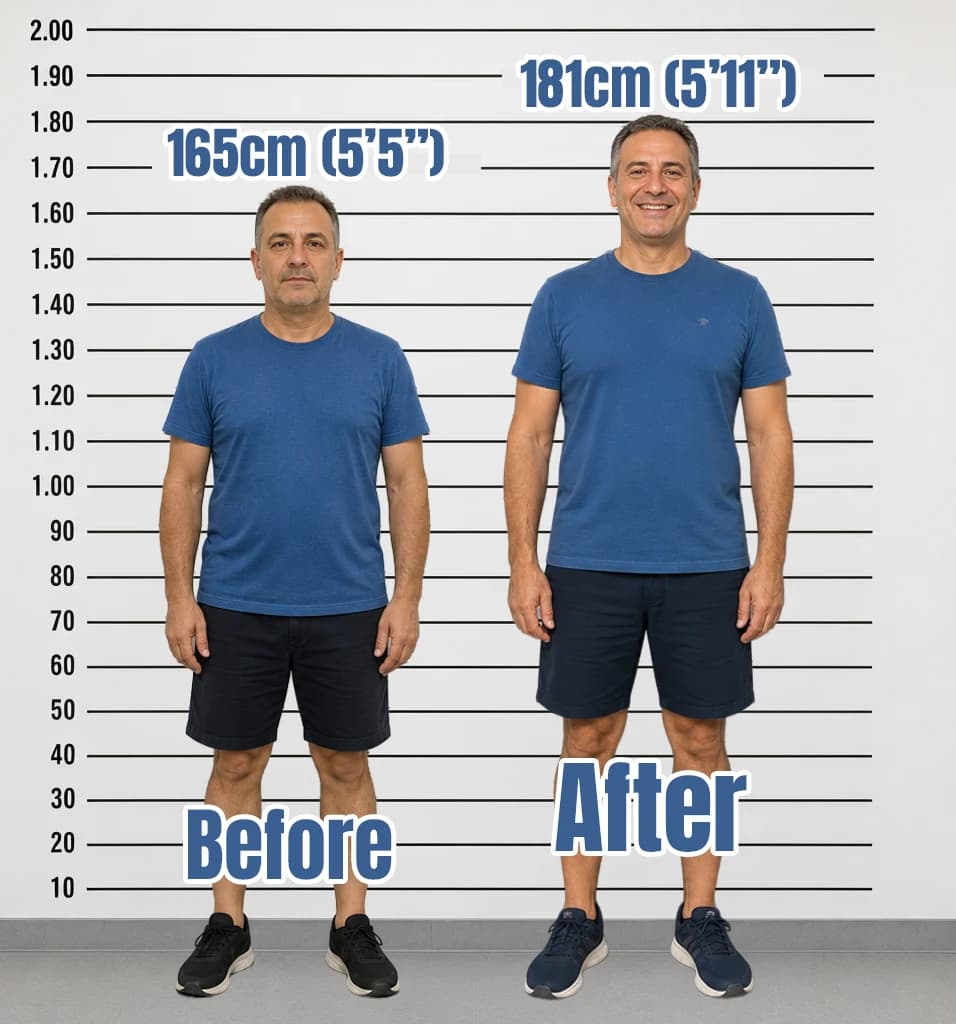
Height numbers reflect published two-stage outcomes (femur + tibia).
We check the surgeon, the hospital, the regulator, and the published outcomes. Before we list. Not after.
We screened hospitals in 47 countries. We checked surgeon names against published case logs. Only 44 made the directory.
Non-union. Nerve injury. Revision surgery. We publish the numbers clinics avoid. Safety is the first filter, not price.
Watch real patients recover.
Watch all videosThese are not clinic marketing videos. Real patients filmed their own recovery — week by week, scars and all. Watch what surgery actually looks like.
Real reviews from across the web.
Quotes pulled from independent sources — Yelp, Healthgrades, Trustpilot, news, forums. We don't fabricate. Click any card to read the full source.
Indraprastha Apollo Hospital in New Delhi is considered to be one of the best hospitals in India concerning limb-lengthening surgeries with a great success ...
Dr Mohsin is an excellent orthopedic doctor who examined my left shoulder sports injury very professionally and diagnosed me accurately with impingement cause ...
Reviews describe OS Clinic staff and clinicians as professional, caring, and providing clear, helpful communication. Patients report swift diagnosis, effective ...
Excerpts are verbatim and unedited. Clicking opens the source. Quotes are not endorsements.
44 clinics. 19 countries. Three continents.
See all 44 →Get matched with the right clinic for you.
Tell us your height goals, budget, and preferred region. Our editors review your profile and introduce you to 2–3 verified clinics that fit your constraints. No commission takes place until after a successful consultation.

Find a surgeon where you can travel.
Patients fly across continents for limb lengthening. We list every verified clinic in the country, with the surgeon named and the methods on offer.
Independent. Editorial. No paid placement. We list every clinic on merit and we publish the rejections too.
Limb lengthening is a six-figure surgery. Patients fly to another continent on the basis of glossy clinic pages and anonymous forum posts. We built this directory because they deserve real reporting.
Every clinic here was checked against hospital records, surgeon credentials, and published outcomes. Clinics that refused, or could not back their claims, sit in our public rejection ledger. Rankings are editorial. Clinics cannot pay to move up.
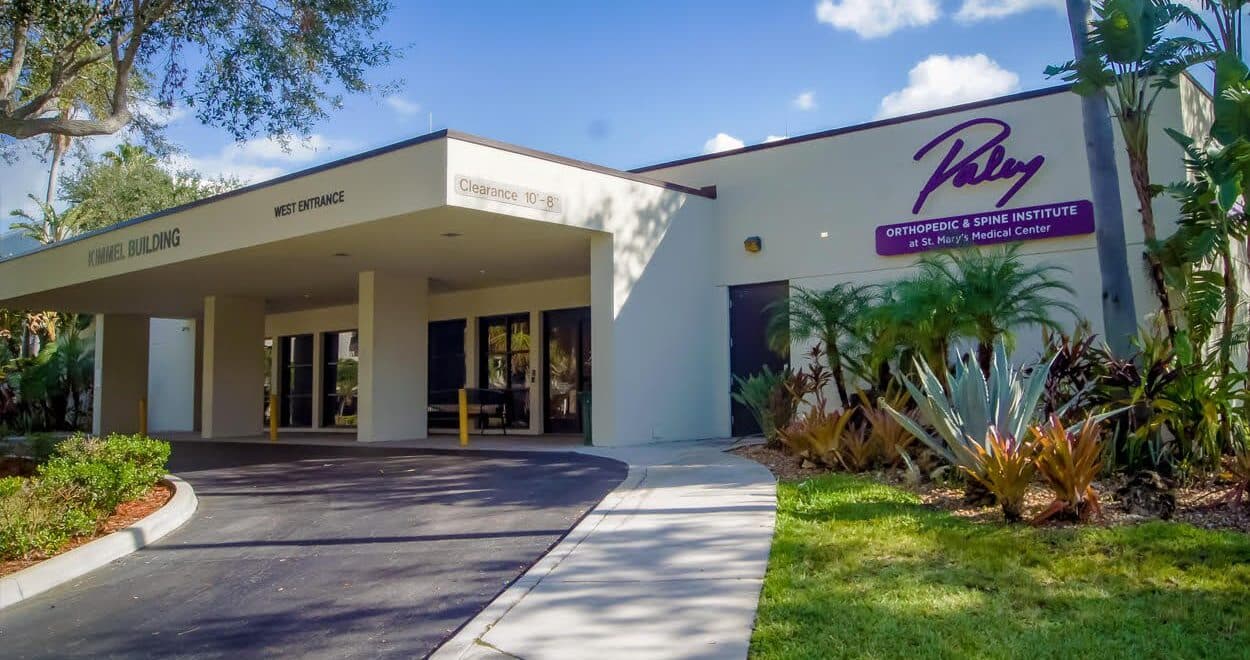
Paley Orthopedic & Spine Institute

Dr. Dror Paley is widely regarded as the most experienced limb lengthening surgeon in the world (performing since 1986). Led first US PRECICE Max surgery (Dec 2023). Bilateral femur lengthening priced ~$104,500; bilateral tibia ~$115,000.

Hospital for Special Surgery
Dr. S. Robert Rozbruch, MD, FAAOS

Rubin Institute for Advanced Orthopedics
Dr. John E. Herzenberg, MD, FAAOS, FRCSC

LimbplastX Institute
Dr. Kevin Debiparshad, MD, FRCSC
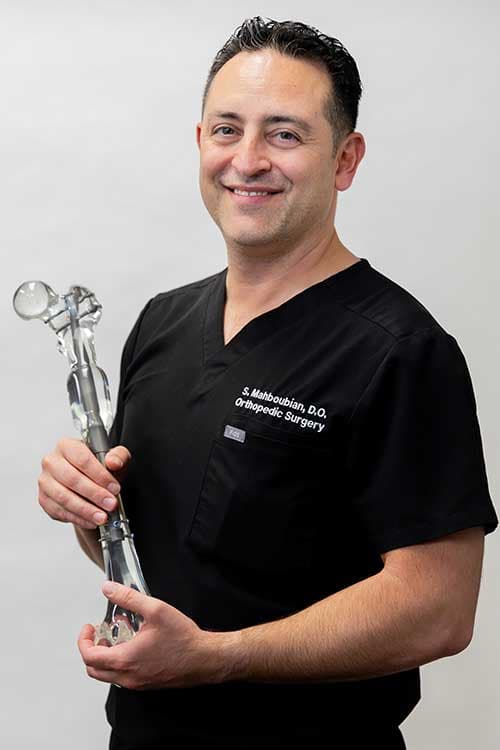
Height Lengthening
Dr. Shahab Mahboubian, DO, MPH

Wanna Be Taller
Dr. Yunus Öç, MD, Assoc. Prof.
AFA Limb Lengthening
Dr. Mustafa Uysal, MD, Prof. Dr.
Methods, compared.
Cross-checked against peer-reviewed evidence.
See the full evidence →Every claim on this site is tied back to something verifiable — a paper, a regulatory filing, a patient diary published by the patient themselves.
Cyborg4Life
The most-cited patient-diary creator. Documented entire ~7 cm femoral lengthening, recovery, and complications honestly.
Open ↗30k-member subreddit
Patients post month-by-month updates with x-ray imaging, recovery photos, and complication discussions. Honest aggregate signal.
Open ↗32.4% complication rate
Pooled rate across 1,847 cosmetic LL cases (2010–2024). Internal-nail methods showed lower complication rates than external fixators.
Open ↗The questions patients actually ask.
All long-form answers →What you actually pay, and where the hidden costs live.
How much does limb lengthening surgery cost in 2026?+
It depends entirely on where you go. The global floor is roughly $22,000 in Turkey for a bilateral femur with the LON method. The ceiling is $75,000–$160,000 in the United States for the same procedure. Germany sits in the middle at $40,000–$90,000. India runs $18,000–$30,000. The 5× spread between the cheapest and most expensive markets reflects local healthcare costs, surgeon fees, and legal exposure — not always quality.
Read the full articleWhere is limb lengthening surgery cheapest?+
Turkey is the global low. International packages start at $22,000 for bilateral femur lengthening at high-volume Istanbul centers. India is the closest second at $18,000–$30,000. Cheapest is not safest — the cost spread is not a quality spread, but a clinic-by-clinic check is essential. We list every Turkish clinic with its surgeon name, case volume, and complication rate where published.
Read the full articleDoes health insurance cover limb lengthening?+
Almost never for cosmetic indications. US, German, and UK insurers reimburse limb lengthening only when it corrects a documented medical issue — congenital length discrepancy, trauma, or skeletal dysplasia. Pure stature gain ("cosmetic" or "elective") is paid out of pocket worldwide. A small number of Turkish and Indian medical-tourism packages bundle hospital stay and follow-up; verify what is included before you book.
Read the full articleAre there hidden costs after the surgery?+
Yes, and they are the single largest source of patient complaints. Headline package prices often exclude implant removal (12–18 months post-op, typically $2,000–$8,000), follow-up imaging, physical therapy, and complication treatment. Ask any clinic for the all-inclusive total — implant, hospital stay, physiotherapy, follow-up imaging, and implant removal. A clinic that gives one number is a different category from one that quotes a base fee plus seven line-items.
Read the full articleComplication rates, the Stryde recall, late risk.
Is limb lengthening surgery safe in 2026?+
Peer-reviewed papers report complication rates of 30–45% for cosmetic limb lengthening. Serious complications — non-union, nerve injury, deep infection — occur in roughly 5–15% of cases. Rates depend heavily on the method and the surgeon's annual volume. Internal-nail methods (PRECICE 2, PRECICE Max) have lower complication rates than external fixators. Safety is more surgeon-dependent than method-dependent — which is the entire point of this directory.
Read the full articleWhat is the Stryde recall, and does it affect me?+
The FDA issued a Class I recall (the most serious tier) of the PRECICE Stryde nail in April 2021 after reports of corrosion at the telescoping junction and bone changes. NuVasive ceased US distribution. If you had Stryde implanted, follow the surgeon's monitoring protocol — typically imaging every 6–12 months. If a clinic still lists Stryde on its method menu in 2026, ask directly whether they implant it and how they monitor existing Stryde patients.
Read the full articleCan things go wrong years after the surgery?+
Yes, though rare. Late complications include implant breakage (rare with current PRECICE generations), bone refracture (most common in patients who returned to impact sports inside 12 months), and chronic nerve pain. Internal-nail methods require implant removal at 12–18 months — a second surgery the original quote may not have included. Long-term outcomes at 5+ years are well documented for reconstructive indications but thinner for purely cosmetic LL.
Read the full articlePRECICE vs LON vs Ilizarov — what fits which patient.
PRECICE 2 vs LON — which is better?+
There is no single answer — they trade off cost against comfort. PRECICE 2 is an internal magnetic nail with weekly clinic visits, no external hardware, and lower complication rates. It is the premium-tier choice and typically costs more. LON (Lengthening Over Nail) combines an external fixator with an internal nail. It costs less and dominates the Turkish market. The external fixator is uncomfortable and requires careful pin-site care. Method choice should follow your surgeon, not your shortlist.
Read the full articleInternal nail vs external fixator — what is the difference?+
Internal nails (PRECICE 2, PRECICE Max) sit inside the bone and are extended by magnet from outside the skin. No external hardware. External fixators are metal frames bolted through the skin into the bone — uncomfortable, visible, infection-prone at the pin sites, but cheaper and with a longer track record for reconstructive indications. Hybrid methods (LON, LATN) combine both. The trade-off is comfort and complication risk versus cost.
Read the full articleFemur vs tibia — which gets lengthened first?+
Femur first is the standard order for patients pursuing both. The femur tolerates more length (6–8 cm typical) and recovers faster than the tibia (5–7 cm typical). Lengthening both in one surgery is rare and risky; two-stage patients usually wait 12–18 months between the femur and the tibia. Doing both at once is more common in Turkey under the LON method but increases total complication risk.
Read the full articleThe 9–18 month timeline. Walking, running, physio.
How long is recovery after limb lengthening?+
Full recovery is 9–18 months. The distraction phase (active lengthening at ~1 mm/day) runs 8–10 weeks. The consolidation phase (the new bone hardening) runs another 3–6 months. Walking without aids returns at 4–6 months. Running and impact sports come back at 9–12 months. Patients who rushed the timeline account for most of the late refractures we see in published case series — do not negotiate this part with the surgeon.
Read the full articleWhen can I walk again after limb lengthening?+
Most patients can walk with crutches within days of surgery. Full weight-bearing without crutches typically returns at 4–6 months, after the distraction phase ends and the new bone consolidates. Internal-nail methods (PRECICE 2, PRECICE Max) generally allow earlier weight-bearing than external fixators or hybrid LON. The timeline is bone-biology-driven, not motivation-driven; an aggressive return is the single biggest predictor of refracture.
Read the full articleWill I need physiotherapy?+
Yes, intensively. Physiotherapy starts within days of surgery and continues for 9–12 months. Active distraction goes hand-in-hand with daily passive and assisted-active range-of-motion work to prevent the joint above and below the lengthened bone from stiffening. Patients who skip physiotherapy lose range of motion permanently. Many clinics include 4–8 weeks of in-house physiotherapy in their international package; confirm what is bundled and what is your responsibility.
Read the full articleHow much taller, scars, age limits — the cosmetic questions.
How much taller can you actually get from limb lengthening?+
The realistic ceiling for a single surgery is 6–8 cm (2.4–3.1 inches) in the femur, or 5–7 cm (2.0–2.8 inches) in the tibia. Patients who do both in two stages can reach 7–8 inches total. Claims of 10+ inches usually involve two separate surgeries 12–18 months apart, with proportion and joint-stress trade-offs that should be discussed openly with the surgeon before booking.
Read the full articleWill scars be visible after limb lengthening?+
Internal-nail methods leave small scars — typically two incisions of 1–3 cm at the knee and hip (femur) or at the knee and ankle (tibia). They fade significantly over 12–24 months. External fixators and hybrid methods leave pin-site scars distributed along the bone — usually 6–10 small puncture marks per leg. Pin-site scars are more visible and take longer to fade. Ask the surgeon for un-retouched 2-year-post-op photos before deciding.
Read the full articleIs there an age limit for limb lengthening?+
Cosmetic LL is typically performed between ages 18 and 45. The lower bound is set by skeletal maturity — surgery before the growth plates close changes the calculation. The upper bound is biological — bone healing slows, nerve adaptation is less reliable, and complication rates rise with age. There is no absolute cutoff. A surgeon will review your imaging and overall health before quoting. Patients over 45 should ask about age-stratified complication data.
Read the full article